HVACR TIP: NO Oil Return, It Might Be Your Suction Line Accumulator

suction line accumulator
Key Takeaways
  • Oil Return Issues: A plugged screen in your suction line accumulator can prevent proper oil return to the compressor
  • Accumulator Function: These components protect compressors from liquid floodback by separating liquid refrigerant from vapor
  • Critical Component: The small orifice at the bottom of the U-shaped internal pipe allows oil to return to the compressor
  • Troubleshooting Step: When experiencing persistent oil failure calls, replace the accumulator if other system checks are normal

Understanding Oil Return Problems in HVAC Systems

Have oil return problems that keep causing nuisance service calls? The culprit might be simpler than you think – a plugged screen in your suction line accumulator.

If you’re not familiar with these components, suction line accumulators are installed in series with the suction line to protect the compressor from liquid refrigerant returning and causing a potentially catastrophic floodback situation. Understanding how these protective devices work is crucial for effective troubleshooting, especially when dealing with heat pump systems that use reversing valves where liquid management becomes even more critical.

How Suction Line Accumulators Work

The accumulator functions as a simple but effective separator. It allows liquid refrigerant to settle in the base of the cylinder while vapor at the top of the vessel continues to flow back to the compressor. This separation is essential for protecting your compressor from liquid damage.

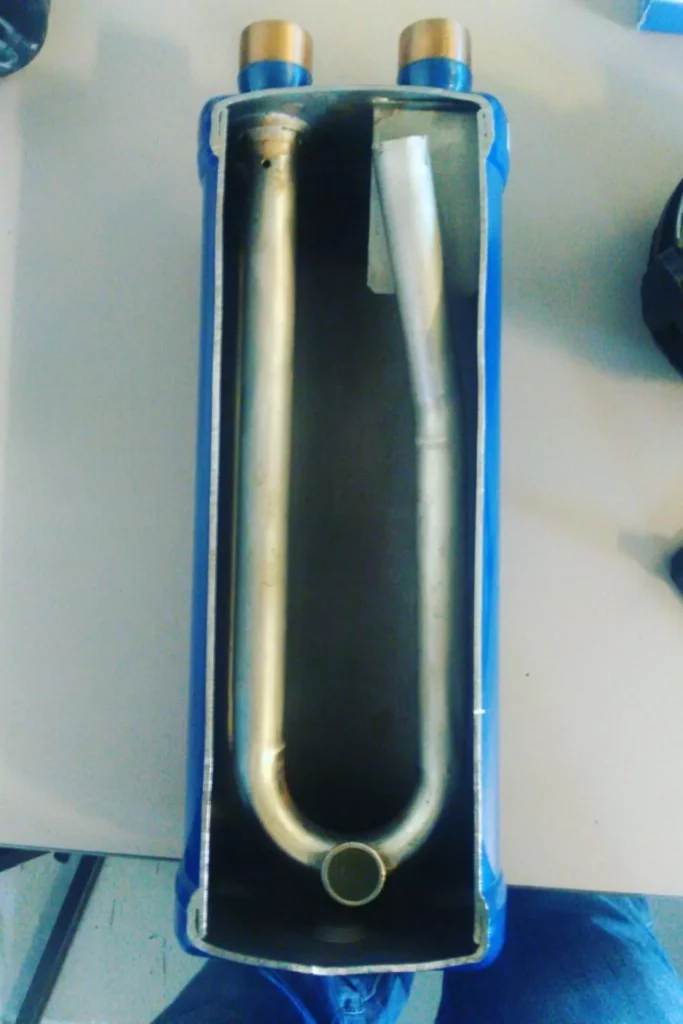
In the image below, you’ll notice there’s a small opening at the bottom of the U-shaped pipe. This tiny but critical orifice allows oil to return back to the compressor while preventing liquid refrigerant from flowing directly through.

suction line accumulator

The Hidden Problem: Screen Obstruction

Here’s where things get interesting – and problematic. If that small screen at the bottom of the U-shaped pipe becomes obstructed with debris, contamination, or sludge, you’ll experience oil return issues. The compressor needs that oil for lubrication, and without it, you’re looking at potential compressor failure.

When you’re experiencing oil return issues or receiving repeated oil failure calls, and everything else in the system checks out okay (proper refrigerant charge, correct line sizing, adequate refrigerant velocity), it’s time to consider replacing the suction line accumulator. This is particularly important in systems that have undergone compressor burnouts or have a history of contamination issues.

Real-World Evidence

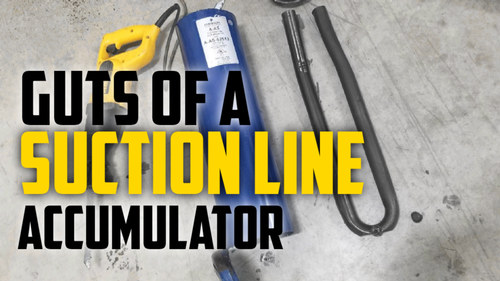
🎥 Check out this revealing video showing a suction line accumulator that was cut open after experiencing oil return issues – you can see exactly how contamination blocks the oil return path:

Inside Look at Accumulator Design

The image below shows a fantastic cutaway example of a suction line accumulator that I photographed at the Emerson Climate Technologies office in Brantford, Ontario. This cross-section clearly demonstrates the internal flow path:

  • Refrigerant enters the cylinder on the right-hand side
  • Any liquid present settles at the bottom of the cylinder
  • Vapor travels back to the compressor from the top opening of the U-shaped pipe
  • The mixture exits the accumulator on the left-hand side, returning to the compressor

This design is similar across most manufacturers, though sizing and specific configurations vary based on system capacity and application. When working with complex refrigeration systems or condensers, proper accumulator sizing becomes even more critical for system reliability.

Best Practices for Diagnosis and Prevention

When troubleshooting oil return problems, follow a systematic approach:

  1. Check refrigerant charge and superheat settings
  2. Verify proper line sizing and refrigerant velocity
  3. Inspect for signs of system contamination
  4. Consider the accumulator as a potential failure point

Remember, just like scheduling preventive maintenance in the shoulder season, proactive accumulator replacement during major system repairs can prevent future oil return issues.

Growing your HVAC business means solving problems efficiently and building trust with customers. Property.com’s ‘Know Before You Go‘ tool helps you arrive at service calls with valuable insights about the property’s permit history and potential system upgrades. This knowledge positions you as the expert who understands not just the immediate problem, but the home’s entire HVAC history. Learn how Property.com helps HVAC pros build credibility and close more high-value repairs.

Learn More with HVAC Know It All

Elevate your HVAC expertise and outshine your peers by delving into our informative blog articles, listening to our industry-specific podcast, and subscribe to our YouTube channel, where we share valuable insights tailored specifically for HVAC technicians seeking to enhance their business and provide exceptional service.

Share this article on:

Gary McCreadie

Gary McCreadie is an HVAC tech, the creator of hvacknowitall.com, the HVAC Know It All Podcast, and owner of McCreadie HVAC & Refrigeration Services

Follow us on:

Save 6% on purchases at TruTech Tools with code knowitall (excluding Fluke and Flir products)

Save 8% at eMotors Direct with code HVACKNOWITALL

Subscribe Now!

Subscribe now and stay up to date with the latest industry trends and HVAC tips and tricks!

Subscribe Now!

Subscribe now and stay up to date with the latest industry trends and HVAC tips and tricks!