
HVAC TIP: SEAL YOUR SERVICE VALVE CAPS FOR A LEAK FREE SYSTEM

Key Takeaways
  • Schrader cores leak frequently: Even new cores can leak through service caps, causing slow refrigerant loss
  • Nylog Blue prevents leaks: Apply thread sealant to all service caps before reinstalling for reliable sealing
  • Electronic leak detectors catch small leaks: Tools like the Testo 316-3 can identify minor leaks that accumulate over time
  • Simple prevention saves callbacks: This quick preventive step eliminates persistent micro-leaks and improves system reliability

The Hidden Leak Point Every Tech Should Check

It wasn’t too long ago I performed a leak check on a couple of large chillers using my Testo 316-3 electronic leak detector. While I found no significant leaks, what I discovered was eye-opening – with all service caps properly in place, many Schrader core valves registered positive readings. They were leaking, even through the caps.

This experience taught me a valuable lesson about an often-overlooked source of refrigerant loss that can plague even the most carefully maintained systems.

The Problem: New Cores, Same Leaks

After that initial inspection, all the cores and caps were replaced with new components. When I returned to the site a couple of weeks later for follow-up work, I made a frustrating discovery. Many of those brand-new Schrader cores were still setting off my 316-3 leak detector, even with the caps securely in place. These were the standard round brass caps with rubber O-ring inserts – the type we’ve all used countless times.

The persistence of these leaks, despite using new components, highlighted a fundamental issue with how we typically handle service valve caps during routine maintenance procedures.

The Solution: A Simple Sealant Application

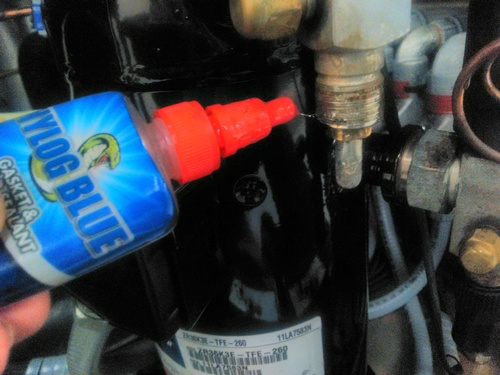
I decided to test a theory. I applied Nylog Blue thread sealant to a few of these problematic fittings, hand-tightened the caps, and rechecked with my leak detector. The results were immediate – the leaks disappeared completely.

This simple addition to my service routine has become standard practice. Now, I apply Nylog to all service caps before reinstalling them, including:

See It In Action

Check out this demonstration video showing the leak detection process and how Nylog Blue eliminates these persistent micro-leaks:

Why This Matters for System Reliability

These small leaks might seem insignificant, but they add up over time. In commercial applications with multiple service valves – think about complex chiller systems with numerous condensers – even minor leaks at each service point can result in substantial refrigerant loss over a season.

The beauty of this preventive measure is its simplicity. A small amount of Nylog Blue on each cap thread creates a reliable seal that prevents both refrigerant loss and moisture infiltration. It’s especially important on systems with expensive refrigerants or those requiring precise charge levels for optimal operation.

Building a reputation for leak-free installations sets you apart from the competition. Property.com’s ‘Know Before You Go‘ tool helps you arrive at service calls prepared with homeowner insights and system history, allowing you to focus on quality work like proper leak prevention. Join Property.com’s exclusive network to access advanced tools that help you deliver superior service and build your professional reputation.

Best Practices for Application

When applying thread sealant to service caps:

  1. Use a small amount – you don’t need much for an effective seal
  2. Apply to the cap threads, not the valve stem
  3. Hand-tighten firmly but don’t over-torque
  4. Verify the seal with your leak detector before leaving the site
  5. Document the preventive measure in your service report

This simple addition to your service routine can prevent callbacks, protect expensive refrigerant, and demonstrate your attention to detail – the hallmarks of a true HVAC professional.


For more tips, tricks, and troubleshooting videos, check out my YouTube channel and The HVAC Know It All podcast here or on your favorite podcast app. Happy HVACing!

Share this article on:

Gary McCreadie

Gary McCreadie is an HVAC tech, the creator of hvacknowitall.com, the HVAC Know It All Podcast, and owner of McCreadie HVAC & Refrigeration Services

Follow us on:

Save 6% on purchases at TruTech Tools with code knowitall (excluding Fluke and Flir products)

Save 8% at eMotors Direct with code HVACKNOWITALL

Subscribe Now!

Subscribe now and stay up to date with the latest industry trends and HVAC tips and tricks!

Subscribe Now!

Subscribe now and stay up to date with the latest industry trends and HVAC tips and tricks!