
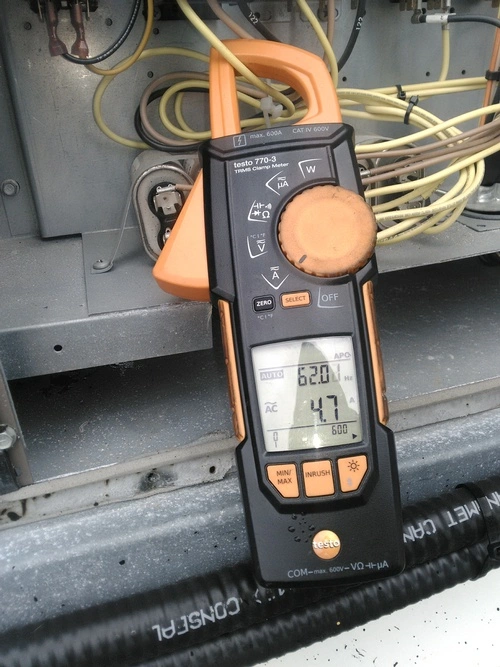
HVAC TIP: How To Test a Run Capacitor Under Load

How To Test a Run Capacitor
Key Takeaways
  • Safety First: Always prioritize shutting down power when testing capacitors – live testing should only be done when absolutely necessary for critical systems
  • Formula Method: Calculate microfarads under load using: Start winding amps × 2650 ÷ Back EMF voltage
  • Required Tools: You’ll need a clamp meter capable of reading both amps and volts to perform this test
  • Tolerance Check: Compare your calculated result to the capacitor’s stamped +/- percentage rating to determine if replacement is needed

How To Test a Run Capacitor Under Load

Testing run capacitors under load provides an alternative method to the traditional approach of shutting down power and checking microfarads (μF) directly with your meter. While this technique has its place in specific situations, understanding when and how to use it safely is crucial for HVAC technicians.

When Live Testing Makes Sense

I always recommend checking capacitors with the power off whenever possible. From a safety standpoint, reaching into an electrical cabinet with the power off is inherently safer than working with live electrical components.

However, certain circumstances may require keeping the system running during testing:

  • The system serves a critical environment (data centers, medical facilities)
  • You’re performing [complex control system setup](https://hvacknowitall.com/blog/bms-control-fundamentals) that requires continuous operation
  • Intermittent issues only appear under load conditions
  • You need to verify capacitor performance during actual operating conditions

The Under-Load Testing Procedure

Follow these steps carefully to test a run capacitor while the system is operating:

  1. Measure Start Winding Current

Set your clamp meter to amps and take an amp draw reading of the motor start winding wire connected to the capacitor. Note this reading carefully.

  1. Measure Back EMF Voltage

Switch your meter to volts and take a reading directly across the capacitor terminals. This measurement gives you the back electromotive force ([EMF](https://openpress.usask.ca/physics155/chapter/6-1-electromotive-force/)) of the motor. Record this voltage reading.

  1. Apply the Calculation Formula

Use the following formula to determine the capacitor’s microfarad value:

Start winding amps × 2650 (constant) ÷ Back EMF = Microfarads

  1. Evaluate the Results

Compare your calculated microfarad reading to the capacitor’s rated value. Run capacitors are stamped with a +/- tolerance percentage (typically 5-10%). If your calculation falls within that range, the capacitor is functioning properly.

Understanding the 2650 Constant

The 2650 constant in this formula represents a mathematical relationship between capacitive reactance, frequency, and the conversion factors needed to arrive at microfarads. This value assumes standard 60Hz operation and incorporates the necessary unit conversions to simplify field calculations.

Safety Considerations and Best Practices

When performing live electrical testing, always follow these safety protocols:

  • Use properly rated personal protective equipment (PPE)
  • Verify your meter is rated for the voltage you’re testing
  • Maintain proper clearances from live components
  • Never work alone on live electrical equipment when possible
  • Be aware of arc flash hazards in commercial equipment

Remember that capacitors can hold charge even after power is disconnected. Always discharge capacitors safely before handling, even if you’ve been testing under load.

Troubleshooting Common Issues

If your calculated microfarad value falls outside the acceptable range, consider these factors before condemning the capacitor:

  • Voltage fluctuations: Unstable supply voltage can affect your readings
  • Motor problems: Failing motor windings can produce misleading results
  • Temperature effects: Extreme temperatures can temporarily affect capacitor performance
  • Measurement errors: Ensure proper meter placement and stable readings

For systems with [complex control architectures](https://hvacknowitall.com/blog/bms-network-architecture-communication), capacitor issues may trigger alarms or affect overall system performance in unexpected ways.

When to Schedule Capacitor Replacement

Proactive capacitor replacement during [scheduled maintenance windows](https://hvacknowitall.com/blog/the-september-sweet-residential-spot-hvac-maintenance) can prevent unexpected failures. Consider replacing capacitors that:

  • Test at the edge of their tolerance range
  • Show physical signs of damage (bulging, leaking)
  • Are more than 5-7 years old in harsh environments
  • Have caused previous system failures

Testing efficiency starts with preparation. Property.com’s ‘[Know Before You Go](https://mccreadie.property.com)’ tool equips certified Pros with critical property insights including equipment age and maintenance history, helping you anticipate capacitor replacement needs before arriving on site. Join our exclusive network to access premium leads with detailed property information that streamlines your diagnostic process.

Expanding Your Diagnostic Skills

Mastering capacitor testing under load is just one aspect of comprehensive HVAC diagnostics. Understanding how capacitors interact with other system components, from [heat pump reversing valves](https://hvacknowitall.com/blog/heat-pump-reversing-valves-explained-how-they-work-in-hvac-systems) to [condenser operations](https://hvacknowitall.com/blog/refrigeration-ac-condensers-the-critical-heat-dissipaters-in-hvac-systems), helps you diagnose complex system issues more effectively.

Check out my [YouTube channel](http://www.youtube.com/channel/UC-MsPg9zbyneDX2qurAqoNQ?view_as=subscriber) for more tips, tricks, and troubleshooting videos, and listen to The [HVAC Know It All podcast](https://hvacknowitall.com/podcasts) on your favorite podcast app for in-depth discussions on advanced diagnostic techniques.

Happy HVACing, and remember – safety always comes first when working with live electrical systems!

Share this article on:

Gary McCreadie

Gary McCreadie is an HVAC tech, the creator of hvacknowitall.com, the HVAC Know It All Podcast, and owner of McCreadie HVAC & Refrigeration Services

Follow us on:

Save 6% on purchases at TruTech Tools with code knowitall (excluding Fluke and Flir products)

Save 8% at eMotors Direct with code HVACKNOWITALL

Subscribe Now!

Subscribe now and stay up to date with the latest industry trends and HVAC tips and tricks!

Subscribe Now!

Subscribe now and stay up to date with the latest industry trends and HVAC tips and tricks!