
As environmental regulations change, HVAC equipment manufacturers are forced to find alternative refrigerants that are not only environmentally safe but also perform well in a variety of applications and are generally safe for technicians.
Many of us in the industry witnessed the change from R22 to R410a during the 2000s and 2010s, and now, with R22 being phased out of production, environmental agencies of nations are seeking further reductions in refrigerants with a high Global Warming Potential (GWP), especially in North America.
It only seems like a matter of time before R410a faces the same chopping block that R22 did. What are the alternatives in the coming years? And what are other places, such as Europe and Asia, doing now?
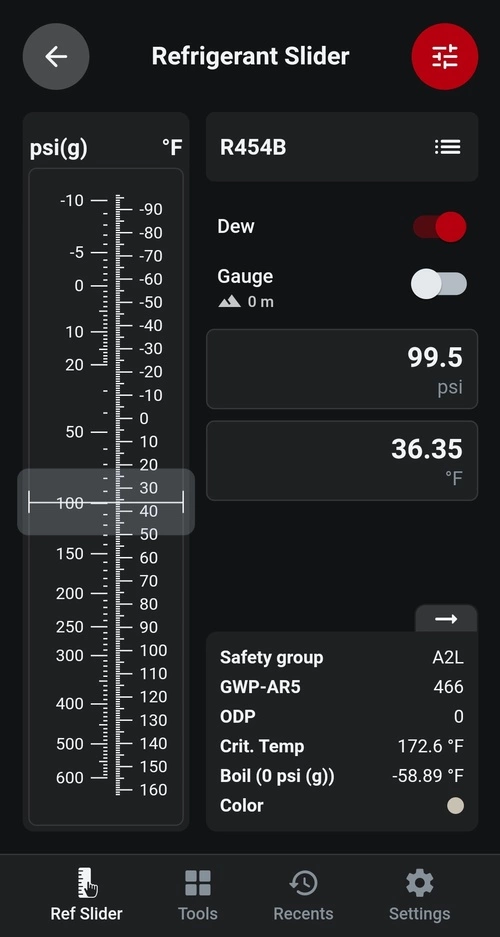
Puron Advance (R-454b)
In December 2018, Carrier announced the creation of what they call Puron Advance. As some may recall, Carrier was the company that spearheaded the creation of R410a, patenting the name Puron back in the 1990s.
Currently, there is little information on R-458b, as the press release is the only source at this time. What is known is that its GWP is 466, which is significantly less than R410a’s rating of 2,088. This refrigerant is slated to appear in Carrier’s product line starting in 2023.
R-454B On The Danfoss RefTools App
R32
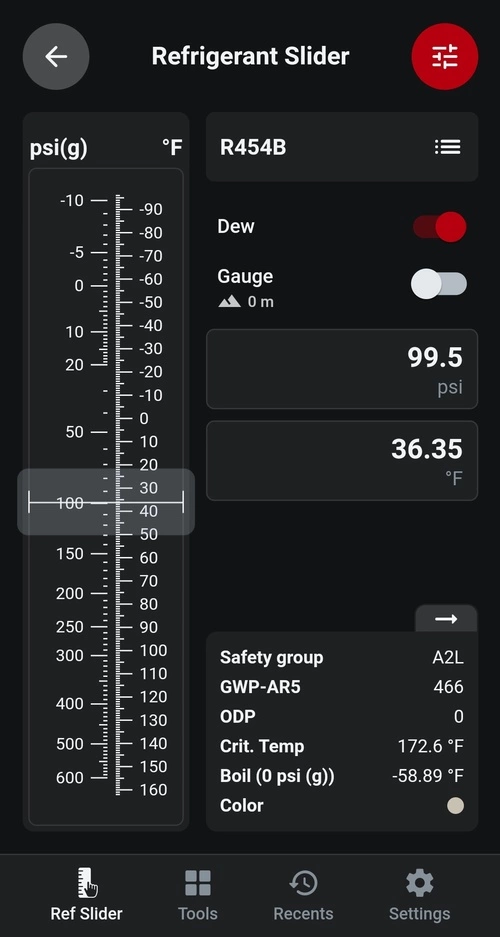
R32 is currently being utilized by a number of manufacturers, notably Daikin and LG. Most, if not all, of us working in the field are already somewhat familiar with R32, as it makes up half of the composition of R410a.
The difference is that R410a also includes R125 as a flame suppressant. R32 has similar working pressures as R410a but delivers slightly more capacity.
Also, because of its higher performance factor, less refrigerant is needed in the equipment to attain its rated capacities. Its GWP rating is 675.
R32 On The Danfoss RefTools App
The main “issue” with the alternatives listed here is the flammability aspect. Many of these lower GWP refrigerants have a higher flammability classification, typically A2 or A2L, which means moderately flammable.
R410a has a classification of A1, which is non-flammable. Here in the United States, the EPA has its Significant New Alternatives Policy (SNAP) program aimed at reducing emissions and keeping safety in mind.
For this reason, some refrigerants with good performance are limited in their applications. This includes the highly flammable (A3) refrigerants propane (R290) and isobutane (R600a), which are currently used in small refrigeration appliances.
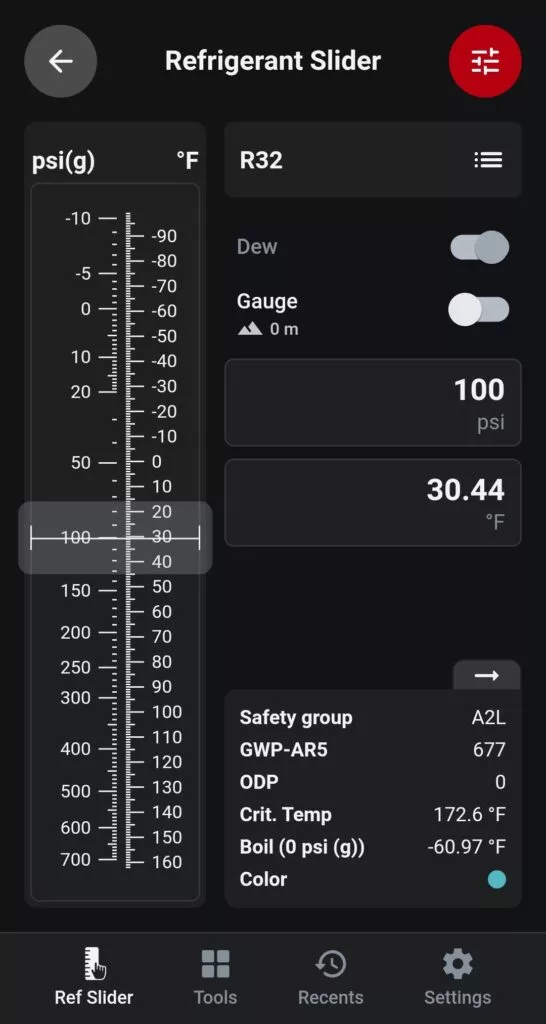
R466A
This refrigerant, developed by Honeywell, is listed separately because its classification is A1. Also introduced in 2018, this refrigerant is composed of R32 (49%), R125 (11.5%), and R1311 (39.5%).
It has a similar performance factor to R410a and was developed as a more direct replacement of R410a in new equipment. Compared to an R410a system charge, equipment would need approximately 10-15% more refrigerant to meet its current performance ratings.
Honeywell is also considering retrofit applications in current R410a systems. Its GWP rating is 733. (https://www.achrnews.com/articles/143923-nonflammable-alternatives-to-r-410a)
R466A On The Danfoss Reftools App
What does all this mean? As these refrigerants start being introduced in equipment in the coming years, it will be useful to know what refrigerants we can expect to see and how best to handle them.
Just as technicians needed to adjust their practices during the transition from R22 to R410a, those who are newer to the field will also be forced to be diligent in ensuring what refrigerant they are dealing with.
Learn More with HVAC Know It All
Elevate your HVAC expertise and outshine your peers by delving into our informative blog articles, listening to our industry-specific podcast, and subscribe to our YouTube channel, where we share valuable insights tailored specifically for HVAC technicians seeking to enhance their business and provide exceptional service.