
Key Takeaways
- Ten years in the field is the readiness sweet spot: Industry data shows contractors who launch after a decade of field experience have significantly better survival rates, but the clock only counts if those years include business exposure alongside technical work.
- Technical skill alone won’t keep the doors open: More than four in ten construction establishments close within five years. The survivors are typically run by owners who learned estimating, customer management, and cash flow before filing their LLC.
- There’s a critical difference between owning a business and owning a job: Running every call yourself, handling every invoice, and being the only person who can close a sale means you bought yourself a 70-hour-a-week position, not a company.
- Financial preparation is non-negotiable: Industry estimates put startup costs for an HVAC company at $40,000 to $150,000 depending on market and model, and you need three months of operating expenses in reserve before the first truck rolls.
Good HVAC technicians eventually ask when they are ready to go out on their own. Industry data and the pattern among surviving businesses point to a consistent answer: ten years.
A decade in the field does not automatically make you a business expert. Contractors who make it past year five tend to have spent roughly that long developing business knowledge alongside their technical skills before filing an LLC.
Why Ten Years Keeps Coming Up
Across industry organizations, contractors who start taking ownership seriously tend to be in their early 30s, roughly a decade into their careers.¹ For someone who entered the trade at 18 or 20, that puts them at about ten years of field experience before they start treating ownership as a real plan rather than a vague someday.
That timing isn’t random. By year ten, a technician has typically survived their first major callback, managed a difficult customer escalation without a manager to call, worked through at least one full economic cycle, and watched at least one colleague’s shop close. That kind of exposure, the kind that only comes from time in the field, is what separates confident readiness from premature optimism.
The Bureau of Labor Statistics data shows how much is at stake: about one in five construction establishments close in their first year, and 43.5% don’t make it to year five.² For the people behind those businesses, closure puts savings, family stability, and years of work at risk.
The vast majority of HVAC companies have nine or fewer employees.³ Most shops are small operations where the owner is still on the truck. The ones that grow beyond that stage are typically run by people who accumulated more than just wrench time before making the leap.
Only about 5% of HVAC mechanics and installers are self-employed, out of a total workforce of roughly 440,900.⁴ That low percentage reflects the reality that ownership isn’t for everyone, and the barrier to entry is higher than most technicians expect when they first start thinking about it.
What Those Years Actually Need to Include
Running service calls and installing equipment for a decade builds valuable experience. Preparing for ownership takes more. The technicians who transition successfully into ownership are the ones who spent those years paying attention to the business side of every company they worked for.
Watch how your employer prices jobs and why the dispatcher routes calls the way they do. Follow how the office handles receivables, including what happens when a customer’s financing falls through. Learn to read financial statements as fluently as you read a wiring diagram.
The median HVAC technician earns $61,010 per year, with entry-level positions starting around $39,130 and senior techs topping out near $91,020.⁴ That income gap reflects the progression from “I can diagnose a system” to “I can manage a complex project and a team.” Business ownership requires that second level of competence as the starting point, plus everything else on top.
Use those pre-launch years to find mentors who have built the kind of company you want to run. The industry has plenty of owners. Fewer have built operations that function without them at the center of every decision. Learning to tell the difference, and learning from the right type of owner, is part of the education.
Industry organizations like PHCC offer business courses specifically designed for technicians considering the transition.⁵ Take those courses while you’re still employed, before signing a lease on your first shop. Getting your financial systems set up early is part of the same preparation. So is understanding what stalls most small HVAC companies before you’re the one stalled.
The Line Between a Business and a Job
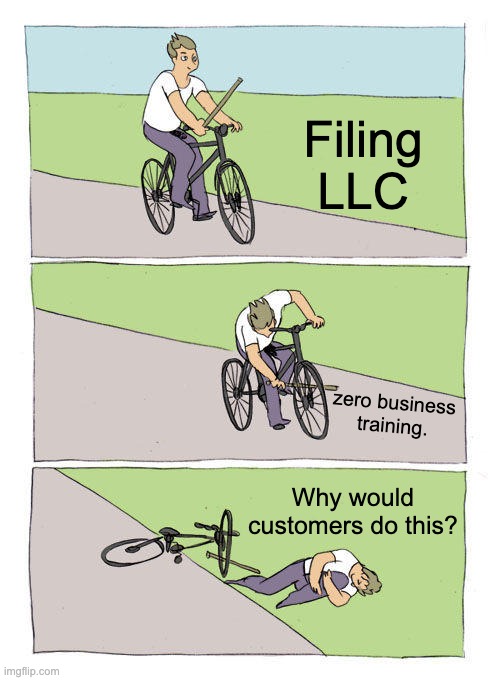
New owners need to understand the difference between owning a business and creating a job for themselves. If you’re the one running every call, writing every estimate, collecting every payment, and managing every callback, you haven’t started a business. You’ve created a position with worse hours, more stress, and no benefits.
First-year owners frequently work stretches of 60 to 90 days without a day off, often earning less per hour than they did as a senior tech. Instead of the freedom they expected, they face payroll, callbacks, and cash-flow pressure while remaining the only person who can diagnose a tricky system.
Business Readiness Scorecard
A real business can operate without you on the truck for a week. It has systems for dispatching, pricing, collections, and quality control that don’t depend entirely on the owner being present for every decision. Building those systems takes intentional effort, and most owners who try to build them while simultaneously running every call burn out within two years.
Industry estimates put startup costs for an HVAC business at $40,000 to $150,000 depending on location, equipment, and licensing requirements.⁶ You also need money to keep operating after launch. You need a minimum of three months of operating expenses in reserve. That means understanding your actual overhead before the first truck rolls. Most financial benchmarks in the trades recommend a current ratio of at least 1.5 and working capital equal to 10% of projected annual revenue.
The growth outlook for the trade is strong. BLS projects 11% employment growth for HVAC mechanics and installers between 2025 and 2035, well above the national average.⁴ That demand is there, but check whether you’re actually ready to capture it. Frustration with your current job can make ownership look easier than it is.
Put that decade to work. Learn the financials, develop a strategy for landing your first customers, and save enough capital to survive a slow first quarter. Those preparations, alongside ten years of field experience, give you a business plan and a chance to build something worth more than a truck and a tool bag.
Additional Sources
- “PHCC Connect: Contractor Demographics and Workforce Development”, Plumbing-Heating-Cooling Contractors Association, Industry Publication, 2024-2025.
- “Business Employment Dynamics: Establishment Survival Rates”, Bureau of Labor Statistics, Government Dataset, data through March 2025.
- “Residential HVAC Industry Profile”, Air Conditioning Contractors of America, Industry Report, 2023.
- “Occupational Outlook Handbook: Heating, Air Conditioning, and Refrigeration Mechanics and Installers”, Bureau of Labor Statistics, Government Report, 2024.
- “PHCC Educational Foundation: Apprenticeship and Business Education Programs”, Plumbing-Heating-Cooling Contractors Association, Industry Publication, 2025.
- “Starting a Small Business: Startup Cost Guidance”, U.S. Small Business Administration, Government Guide, 2024.
