
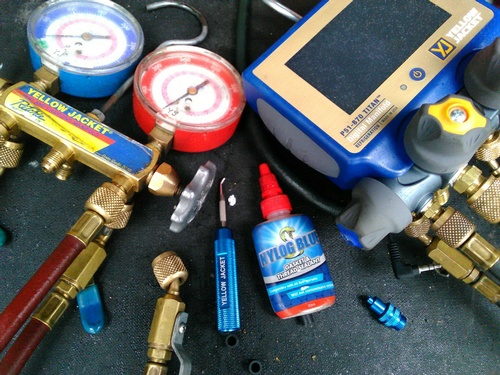
HVAC TIP – REPLACE REFRIGERANT HOSE SEALS ON THE REGULAR

Key Takeaways
  • Regular Inspection: Check hose seals before each use for compression or damage to prevent leaks during testing and evacuation
  • Proper Tools: Use specialized tools like the Yellow Jacket Gasket Remover for safe, efficient seal replacement
  • Assembly Lubricant: Apply Nylog Blue during installation to maintain seal flexibility and prevent premature failure
  • Avoid Over-tightening: The number one cause of seal failure is excessive torque when connecting hoses

The Hidden Cost of Neglected Hose Seals

To some HVAC technicians, replacing hose seals or gaskets is actually a foreign concept – hose maintenance, you say? Yet this simple oversight can lead to frustrating callbacks, inaccurate readings, and wasted refrigerant. Just as we emphasize proper refrigerant leak checking procedures, maintaining your hose connections is equally critical for system integrity.

Hose maintenance is an integral part of successful day-to-day service and installation. When hose seals become compressed or broken, several problems arise:

  • Leaks during testing or evacuation – compromising your vacuum readings
  • Restriction to flow – I’ve witnessed this cause misdiagnosis of system issues
  • Contamination risks – damaged seals allow moisture and air infiltration
  • Wasted time – chasing phantom leaks that originate from your own equipment

When to Replace Your Hose Seals

The frequency of replacements really depends on use and abuse of your hoses. Heavy-use technicians might need monthly replacements, while lighter users can go quarterly. The key is developing a consistent inspection routine.

Visual Inspection Guidelines

Inspect seals before usage – if they appear:

  • Compressed or flattened – no longer creating proper seal
  • Cracked or split – allowing bypass around the seal
  • Hardened or brittle – lost their elasticity
  • Missing chunks – obvious physical damage

Then it’s definitely time to replace them. Remember, it’s far cheaper to replace a $0.50 seal than to lose refrigerant or compromise a refrigeration system evacuation procedure.

The Right Tools for the Job

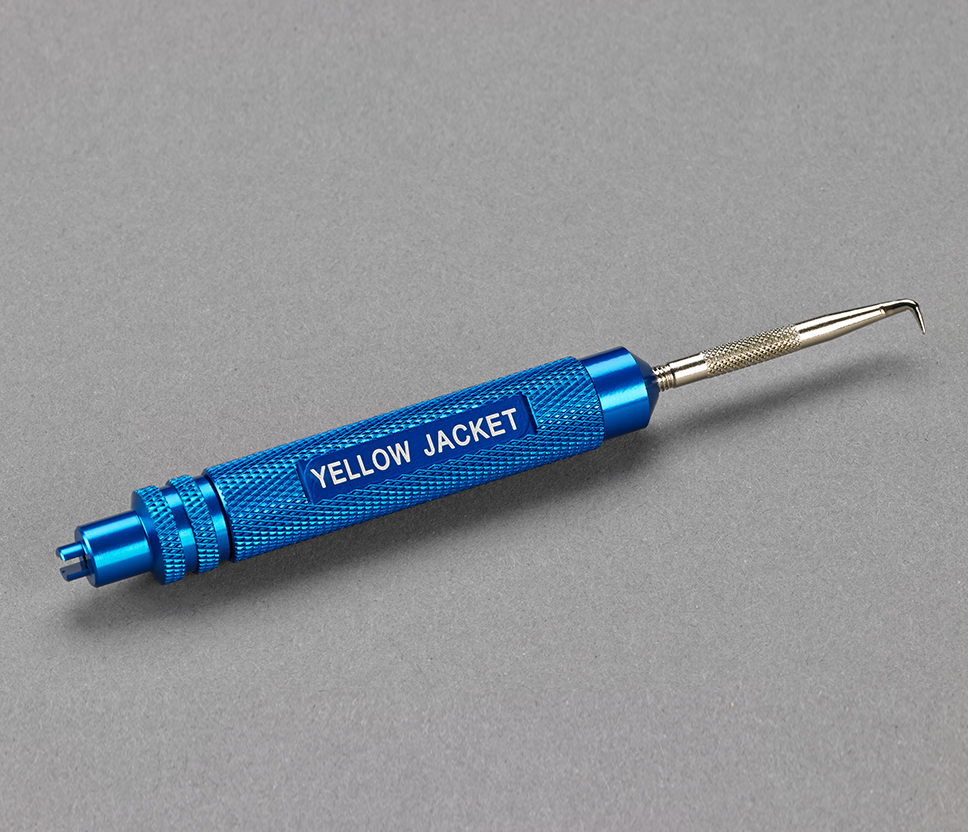
The Yellow Jacket Gasket Remover Tool is designed specifically for this task. It’s actually three tools in one:

  • A precision pick for removing old seals
  • A Schrader core tool for valve service
  • A storage compartment for spare seals

I suggest using Nylog Blue during assembly to help keep the seal and hose connection lubricated. This prevents the seal from binding during installation and extends its service life.
Proper Installation Technique

The most important rule: don’t over-tighten your hoses. This is the number one cause of seal failures. The connection should be snug but not forced. If you’re using tools to tighten hose connections, you’re likely overdoing it.

Step-by-Step Process

  1. Remove the old seal completely using the pick tool
  2. Clean the sealing surface of any debris
  3. Apply a thin layer of Nylog Blue to the new seal
  4. Insert the seal squarely into the fitting
  5. Hand-tighten the connection until you feel resistance
  6. Give an additional 1/4 turn maximum with your hand

The video below shows the tool in action using Nylog Blue as an assembly lubricant:

Building Professional Habits

Just as we need to seal service valve caps for a leak-free system, maintaining our diagnostic equipment should be second nature. Consider keeping a small maintenance kit in your truck with:

  • Spare seals for different hose sizes
  • Nylog Blue or similar assembly lubricant
  • Gasket removal tool
  • Clean rags for surface preparation

Speaking of building professional habits, Property.com’s ‘Know Before You Go‘ tool helps you arrive at every job prepared with complete equipment history and homeowner insights. Just like maintaining your tools prevents callbacks, having detailed property information prevents wasted trips. Learn how Property.com helps HVAC pros work smarter, not harder.

The Bottom Line

Hose seal maintenance might seem trivial, but it’s these small details that separate professional technicians from the rest. A few minutes of preventive maintenance saves hours of troubleshooting phantom leaks and ensures accurate diagnostics every time.

Check out my YouTube channel for more tips, tricks, and troubleshooting videos, and catch The HVAC Know It All podcast here or on your favorite podcast app. Happy HVACing!

Share this article on:

Gary McCreadie

Gary McCreadie is an HVAC tech, the creator of hvacknowitall.com, the HVAC Know It All Podcast, and owner of McCreadie HVAC & Refrigeration Services

Follow us on:

Save 6% on purchases at TruTech Tools with code knowitall (excluding Fluke and Flir products)

Save 8% at eMotors Direct with code HVACKNOWITALL

Subscribe Now!

Subscribe now and stay up to date with the latest industry trends and HVAC tips and tricks!

Subscribe Now!

Subscribe now and stay up to date with the latest industry trends and HVAC tips and tricks!