
Key Takeaways
- Temperature Impact: Refrigerant tank pressure drops significantly in cold weather – R404a pressure falls from 162 PSI at 75°F to just 44 PSI at 10°F
- Safe Heating Method: Use a thermostatically controlled tank heater like the Yellow Jacket Wrap-Around Heater to maintain safe, consistent pressure
- Avoid Dangerous Practices: Never use a torch on pressurized vessels – this creates serious explosion and fire hazards
- Efficiency Benefit: Proper tank heating ensures faster, more efficient refrigerant charging during winter service calls
The Cold Weather Charging Challenge
If you work in an area of the world where winters are harsh, then you have probably experienced difficulty charging a system due to low refrigerant tank pressure. This common frustration can turn a routine service call into a time-consuming ordeal, especially when you’re dealing with freezing temperatures and impatient customers.
Understanding Pressure-Temperature Relationships
Refrigerant tank pressure is directly related to the ambient temperature surrounding the vessel. This fundamental principle of refrigeration affects every charging operation in cold weather. For example:
- R404a at 75°F: 162 PSI
- R404a at 10°F: 44 PSI
As many of us have experienced, refrigerant flows into a system much more quickly with relatively high tank pressures. This dramatic pressure drop in cold conditions can make proper system evacuation procedures nearly impossible to follow efficiently.
Common (But Problematic) Solutions
The Hot Water Method
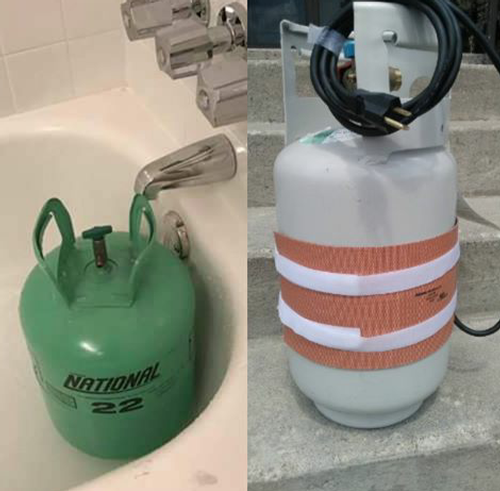
Some technicians have plunged tanks into buckets of hot water to raise the pressure, but the problem with this method is that the water loses heat very quickly. You’ll find yourself constantly refilling the bucket, wasting time and water while still struggling to maintain adequate pressure.
The Dangerous Approach
WARNING: It is not recommended to torch any pressurized vessel in an attempt to raise the pressure. This can be an extremely dangerous undertaking that risks explosion, fire, and serious injury. The uneven heating can also damage the tank’s integrity and create weak spots.
The Professional Solution: Tank Heaters
Using a tank heater, such as the Yellow Jacket Wrap-Around Heater, will ensure the tank heats up quickly and maintains elevated internal pressures for ease of charging in cold ambient conditions.
Key Features
The 200 Watt heater utilizes a built-in thermostat to maintain a tank surface temperature of no greater than 130°F. This controlled heating:
- Prevents tank damage from overheating
- Maintains consistent pressure throughout the charging process
- Eliminates the need for constant monitoring
- Works effectively even in sub-zero conditions
This approach is particularly valuable when working on heat pump systems with reversing valves that require precise refrigerant charges for optimal performance in both heating and cooling modes.
See It In Action
Check out the video for a live demonstration of how tank heaters can transform your cold weather charging experience:
Planning Ahead for Winter Service
Smart technicians prepare for cold weather challenges before the season hits. Just as you’d schedule September heating maintenance to avoid the October rush, having the right tools ready for winter service calls ensures you can work efficiently regardless of conditions.
Speaking of working smarter in challenging conditions, Property.com’s ‘Know Before You Go‘ tool helps you prepare for service calls by providing detailed property insights including system age, permit history, and potential upgrade opportunities. This preparation is especially valuable for cold weather calls where efficiency matters most. Learn how Property.com helps HVAC pros maximize their winter service profitability.
Conclusion
Don’t let cold weather slow down your refrigerant charging operations. A quality tank heater is an essential tool for any technician working in cold climates, ensuring safe, efficient charging while protecting both your equipment and your productivity. Remember to always check for refrigerant leaks after charging, as cold weather can mask small leaks that become apparent when temperatures rise.
Check out the link to my YouTube channel for more tips, tricks, and troubleshooting videos and check out the The HVAC Know It All podcast here or on your favourite podcast app. Happy HVACing…