
Key Takeaways
- Location Matters: The King valve is ONLY located at the receiver outlet – nowhere else on the system
- Three Positions: All service valves have back seated, mid seated, and front seated positions for different service operations
- Right Tool Required: Always use a refrigeration service wrench, not adjustable wrenches, to prevent valve stem damage
- Safety First: Always wear appropriate PPE and take precautions against refrigerant burns and pressure blow-off when working with service valves
The King Valve Location: Getting It Right Every Time
There’s a common mistake that I hear from HVAC and refrigeration technicians that needs addressing. “Hey man, can you front seat the compressor King valve.” This misconception grinds my gears a little, only because the King valve has one distinct address on a system. The receiver outlet is the ONLY place you’ll find a King valve – that’s it!
Interestingly enough, the valve mounted on the receiver inlet has its own royal title – the Queen valve. The Queen valve is less common but can be used in conjunction with the King valve to isolate the receiver completely. If a service valve is found on the discharge line, it’s simply called a discharge service valve. If found on the suction line, it’s a suction service valve. No royal titles needed there!
Understanding Service Valve Positions
The King valve is unique in its position because it allows you to pump down a system by closing it and running the compressor until all or most refrigerant is pumped out of the low side of the system and into the condenser and receiver. This is crucial for many service procedures, including proper system evacuation and component replacement.
Most service valves, regardless of their name, have three distinct positions:
Back Seated Position
The normal operating position where the valve is fully open to system flow and the service port is closed off.
Mid Seated Position
Also called “cracked,” this position allows system flow while also opening the service port for gauge connections or refrigerant recovery.
Front Seated Position
This closes off system flow while opening the service port – used for isolating components or pump down procedures.
The Right Tool for the Job
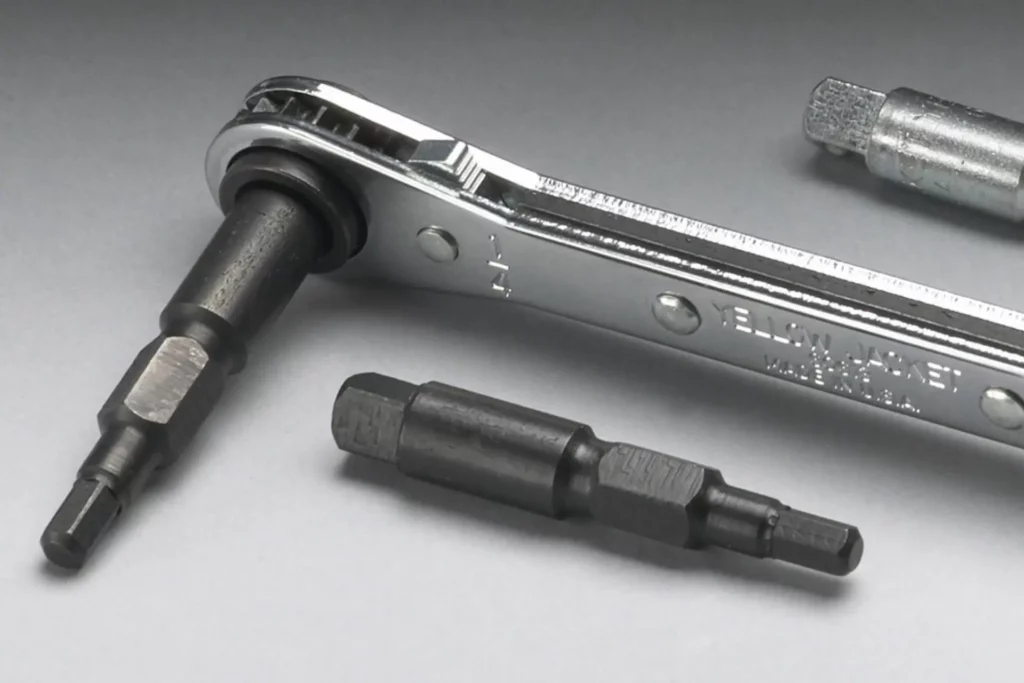
A refrigeration service wrench should always be used to adjust these valves. Have you ever run into a valve stem that’s rounded? The most common reason for this damage is someone using an adjustable wrench rather than a proper refrigeration service wrench. If you don’t own one, get one… Seriously!
Some service valves are equipped with a packing gland that prevents the valve assembly from leaking. The packing gland nut should be loosened slightly before adjusting the valve stem to prevent damage to the packing material. After adjustment, remember to retighten it to prevent refrigerant leaks – a critical step often overlooked during refrigerant leak checking procedures.
Check out the video below for a more detailed explanation and click the image below for more info on the Yellow Jacket service wrench and adapter.
When it comes to building your HVAC business and attracting quality customers, having the right tools extends beyond your service truck. Property.com’s ‘Know Before You Go‘ tool gives certified HVAC pros exclusive homeowner insights – from permit history to upgrade potential – before you even arrive at the job site. This competitive edge helps you prepare better quotes and close more high-value service contracts. Learn how Property.com helps HVAC professionals stand out in their market.
Safety First When Working with Refrigerants
Regardless of the job at hand, when working with refrigerants and service valves, safety must be your top priority. Always wear appropriate PPE including safety glasses and gloves. Use caution to avoid injury from refrigerant burns and pressure blow-off, especially when front seating valves under system pressure. Remember that refrigerant can cause severe frostbite on contact with skin, and sudden pressure releases can cause serious injury.
Before adjusting any service valve, always check system pressures and ensure you understand the valve’s current position. Never force a valve stem – if it’s stuck, apply penetrating oil and allow time for it to work rather than risking valve damage or sudden pressure release.
Conclusion
Knowing the correct location and function of the King valve is fundamental for HVAC technicians servicing refrigeration systems. Located exclusively at the receiver outlet, this valve plays a crucial role in system pump downs and service procedures. By using the proper tools – especially a refrigeration service wrench – and understanding the three valve positions, technicians can work more efficiently while preventing costly damage to equipment. Remember to always prioritize safety and take time to properly seal service valve caps after any service work.
For more HVAC tips and in-depth knowledge, check out our podcast and explore other insightful blog articles. Stay ahead in your HVAC career with the latest updates and expert advice from HVAC Know It All!