Key Takeaways
- Access Challenge: Many self-contained reach-in coolers lack service valves, making troubleshooting difficult but reducing potential leak points
- Temporary Solution: Yellow Jacket recovery pliers provide temporary system access without permanent modifications for initial diagnostics
- Recovery Method: Small refrigerant charges can be recovered using an evacuated tank instead of a full recovery machine
- Permanent Installation: Always install permanent service valves after diagnosis for future maintenance and EPA compliance
Why Service Valves Matter for Reach-In Refrigeration
When servicing small, self-contained reach-in coolers and freezers, you’ll quickly discover that many units come from the factory without service access valves. While this design choice reduces potential leak points and manufacturing costs, it creates significant challenges when you need to test pressures, check superheat measurements, or perform evacuation and recovery procedures.
Without proper access points, even basic diagnostics become complicated. You can’t verify refrigerant charge, check for restrictions, or properly evacuate the system during repairs. This limitation often leads technicians to make educated guesses rather than data-driven decisions.
Diagnosing Cooling Problems Without Service Ports
When you encounter a reach-in unit that’s not maintaining temperature and suspect a refrigerant issue—whether it’s a leak, restriction, or improper charge—you’ll need to gain system access. Common symptoms that require pressure testing include:
- Compressor running continuously without adequate cooling
- Frost patterns indicating refrigerant problems
- Unusual compressor sounds suggesting liquid flood-back
- Temperature swings beyond normal operating range
The Yellow Jacket Solution for Temporary Access
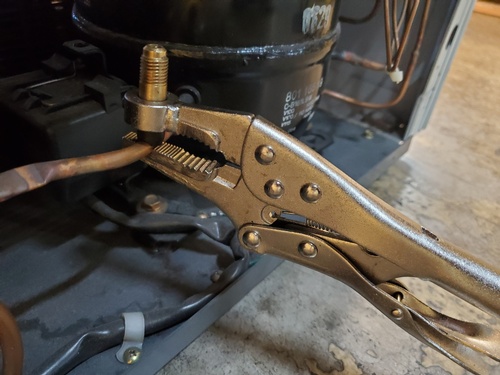
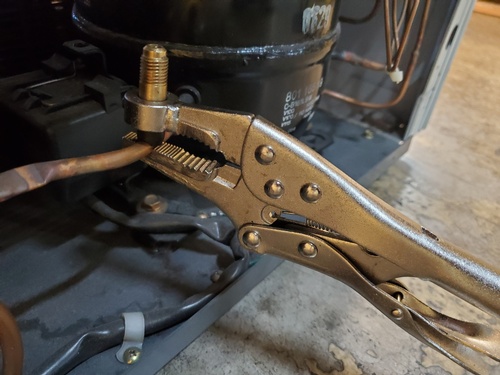
Yellow Jacket manufactures an ingenious tool that provides temporary system access without brazing or permanent modifications. These specialized pliers feature a piercing needle with a rubber seal on one jaw, and a 1/4″ service valve connection on the opposite side.
The process is straightforward: adjust the pinch depth for your pipe diameter, then clamp the pliers onto the system tubing. For comprehensive diagnostics, use one set on the high side and another on the low side. This temporary access allows you to verify system pressures and diagnose issues before committing to permanent modifications.

Once you’ve identified the problem, you must recover the refrigerant before installing permanent access valves. This step is crucial for EPA compliance and environmental responsibility.
Smart Recovery Technique for Small Charges
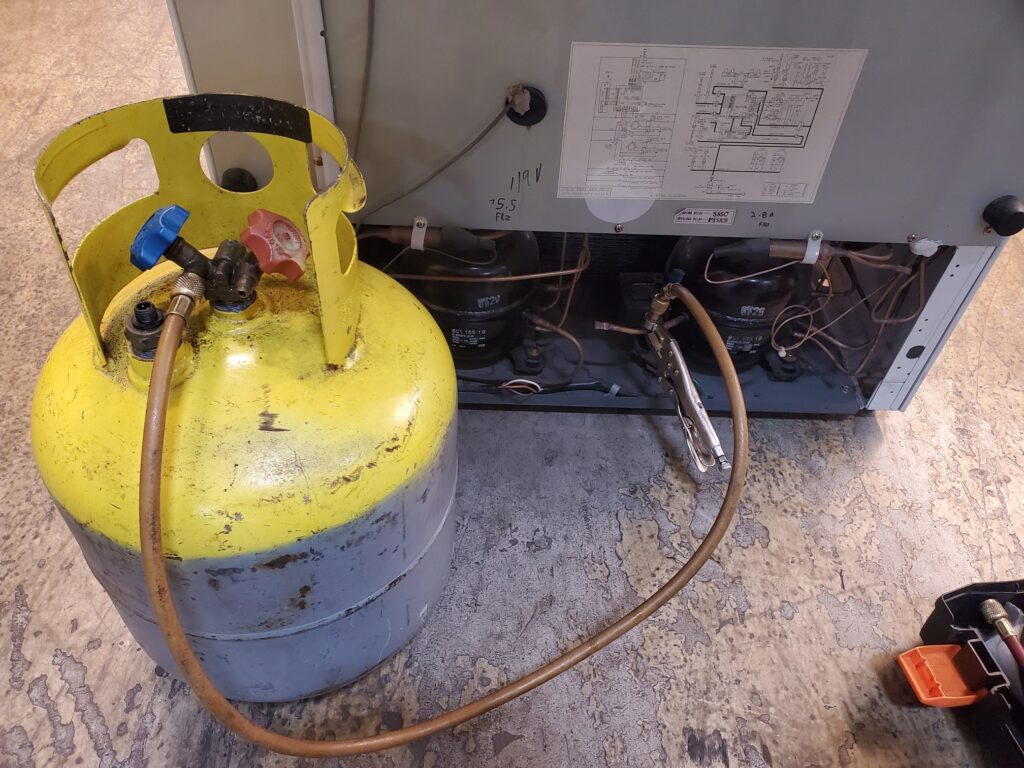
Here’s a professional tip that saves time and equipment wear: since reach-in coolers typically contain only a few ounces of refrigerant, you don’t always need to haul a recovery machine to every job. An evacuated recovery tank can effectively remove the entire charge through pressure differential.
Setting Up Your Recovery Tank
- Connect a vacuum-rated hose from your empty recovery tank to your vacuum pump (skip the manifold gauges—they’re unnecessary here)
- Run your pump to pull the tank into a deep vacuum
- Position a micron gauge on the tank to verify you’ve achieved proper vacuum levels
- Target a vacuum level below 500 microns for optimal recovery efficiency
Executing the Recovery
With your tank properly evacuated, the recovery process becomes simple physics. Connect your charging hose to the system through the temporary access valve (pliers), then attach the other end to your evacuated tank. When you open the tank valve, the significant pressure differential between the evacuated tank and the pressurized system will naturally transfer the refrigerant—no electricity or mechanical recovery required.

This method works particularly well for systems with proper refrigerant gas volume typical of reach-in units. The entire charge transfers quickly and completely in most cases.
Installing Permanent Service Valves
After recovery, you’re ready to install permanent access valves. This critical step ensures future technicians (including yourself) can properly service the unit without repeating the piercing process. Consider these factors when selecting and installing valves:
- Choose valves rated for the system’s operating pressures
- Install both high and low side access for complete diagnostics
- Position valves in accessible locations for future service
- Use proper brazing techniques to prevent leaks
- Always replace refrigerant hose seals on your gauges before testing
Working on commercial refrigeration equipment? Property.com’s ‘Know Before You Go‘ tool helps HVAC professionals understand a business’s equipment history and maintenance patterns before arriving on-site. This insight allows you to bring the right parts and tools, improving first-call resolution rates. Learn how Property.com helps refrigeration specialists build stronger commercial relationships.
Best Practices for Future Maintenance
Once you’ve installed permanent service valves, document their location and type in your service records. This information proves invaluable for future service calls. Additionally, ensure valve caps are properly sealed to prevent slow leaks—a common oversight that can lead to callbacks.
Remember that these modifications, while necessary for proper service, do introduce additional potential leak points. Always perform a thorough leak check after installation, paying special attention to your new brazed joints and valve cores.
Conclusion
Installing service valves on self-contained reach-in coolers and freezers transforms a challenging service situation into a manageable repair. By following these procedures—from temporary access through permanent valve installation—you ensure these systems can be properly maintained throughout their service life. The initial investment in time and materials pays dividends through easier diagnostics, faster repairs, and improved system reliability.
For more expert insights on refrigeration system components and troubleshooting techniques, check out the HVAC Know It All Podcast. Each episode delivers practical knowledge from industry professionals, helping you stay current with evolving refrigeration technology and best practices.