
The Past
Prior to my time at Bathica TOSOT, I did some contract work for Heat Controller, Inc. out of Jackson, MI.
You know them by the brand name Comfort-Aire.
I had the pleasure of learning the history of the mini split from a man who lived it, Mr. Don Peck, the CEO of Heat Controller at that time and an employee there for over 50 years.
Why Were Split Systems Developed?
Don was always proud to tell me that the FIRST mini split was developed by Heat Controller: here are his exact words:
“The first introduction in 1965 was the Comfort-Aire Twin which was a window air conditioner with a split cabinet design that allowed the window to close into the center of the unit with the compressor and the condenser fan on the outside of the window and the indoor fan on the inside making for a very quiet application”.
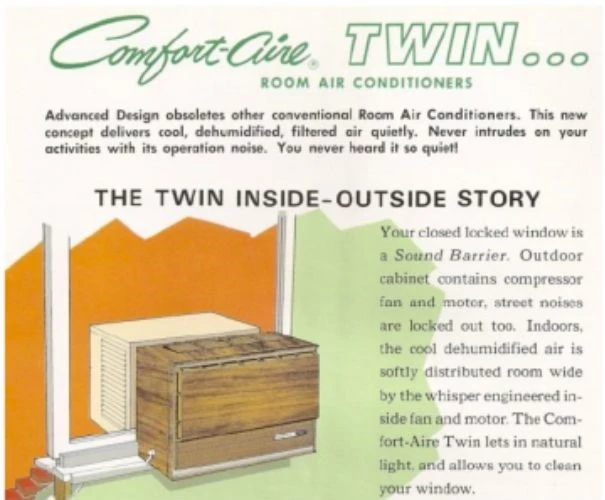
The Twin Pac, the first mini split, was an offshoot of the Twin and was originally developed for Sears in 1969 and went by the name “Sears Modular Central Air Conditioning System.”
They offered two sizes, a 6000 BTU (115 V) and 16000 BTU (230 V).
The original units had only 8′ of refrigerant lines, were quick connect and included a double wrench kit for making the connection.
In 1971 the Twin Pac where made available under the Comfort-Aire label.
Three sizes were then offered, (6000 BTU, 11000 BTU, and 16000 BTU). The line set accessories were also changed to allow for up to 19′ between the indoor and outdoor units.
WW Grainger and Harry Alter Co. were probably the largest wholesale customers.
The product went away when the federal government instituted the first EER rating of 8.0, in the late 1980s as the product was classified as a split system rather than a room unit.
Here is an actual piece of literature for the Comfort-Aire Twin Pac.
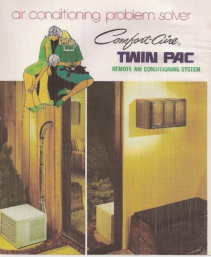
Look at the indoor unit…seems like EVERYTHING was wood grain back in the 70’s!
Don always made a point to say that in 1974, the Comfort-Aire Twin Pac won the Product of the Year award in the state of Michigan…it beat out the 1974 Ford Mustang.
Now, you might say that just about anything should have beaten this car…
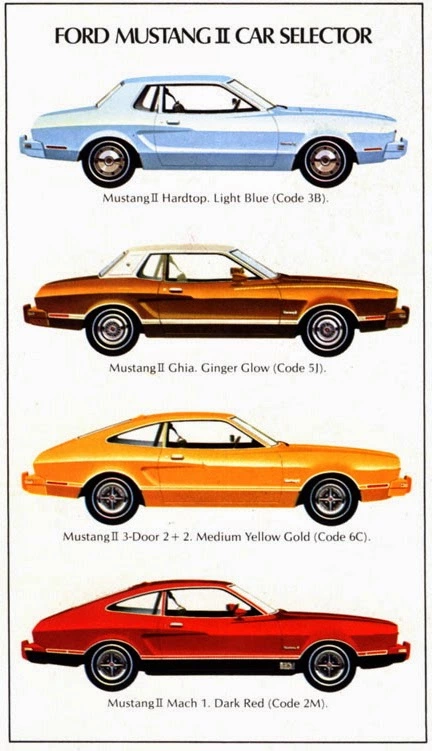
But those of us who are old enough to remember know that Ford sold a bunch of these cars and for any non-automotive product to win in Michigan was unheard of at the time!
Now, let’s climb into the 1982 DeLorean DMC-12 and set the flux capacitor to 2021.
Fifty-two years forward from the introduction of the first mini-split in North America.
In those fifty-two years, we went from the lunar module to the space shuttle, to SpaceX.
We went from the 1969 Ford Mustang with a 390 cu.in., 6.4 liters, V8 motor to the 1974 Mustang II with a 2.3 liter, 4 cylinder motor to the 2021 Mustang Shelby GT500 with a supercharged 5.2 liter, V8 producing 760 HP. and we went from the Comfort-Aire Twin Pac in 1969 with an EER of something less than 8 to the TOSOT LOMOPLUS…
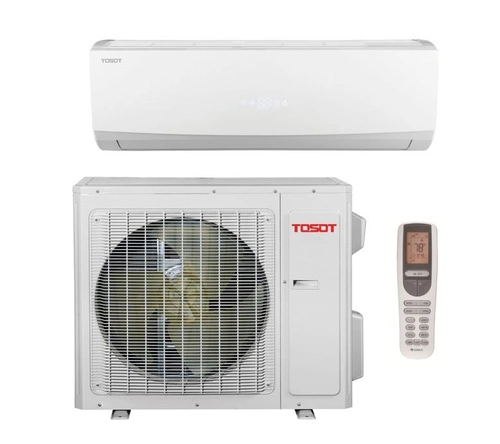
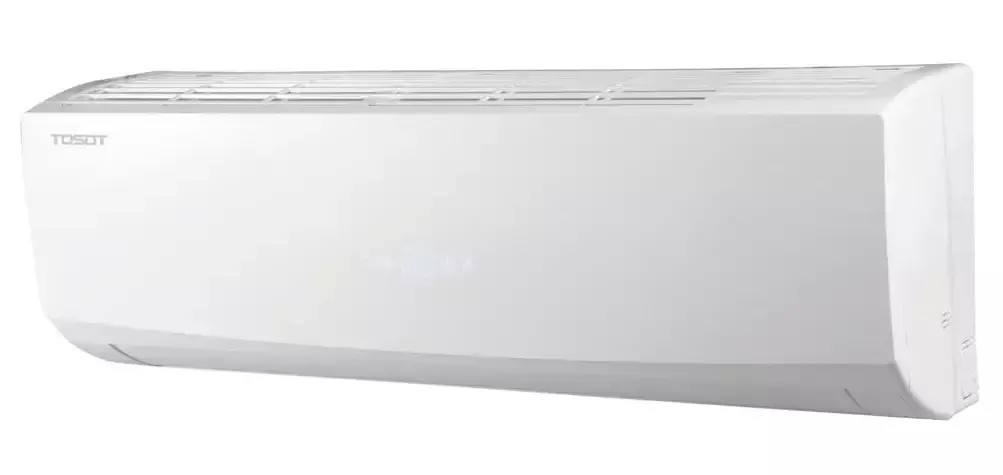
Here we have the TOSOT LOMOPLUS high wall mount unit.
The Present
A 12K LOMOPLUS IDU is just 39.9” long X 12.1” high X 8.7” deep.
No funky wood grain but rather a simple, discrete clean appearance.
The Comfort-Aire Twin Pac of the early 1980s left the market because it could not meet an EER of 8 required back in the day.
The LOMOPLUS well, The 12K LOMOPLUS has an EER of 15.3 and a SEER of 30.5 (the 9K LOMOPLUS has an EER of 16.5 and a SEER of 38).
Oh yeah, the Comfort-Aire Twin Pac had a maximum lineset length of 19’.
The TOSOT LOMOPLUS TW24HQ3D6D has a maximum lineset length of 164, now that’s progress!
Learn More with HVAC Know It All
Elevate your HVAC expertise and outshine your peers by delving into our informative blog articles, listening to our industry-specific podcast, and subscribe to our YouTube channel, where we share valuable insights tailored specifically for HVAC technicians seeking to enhance their business and provide exceptional service.